
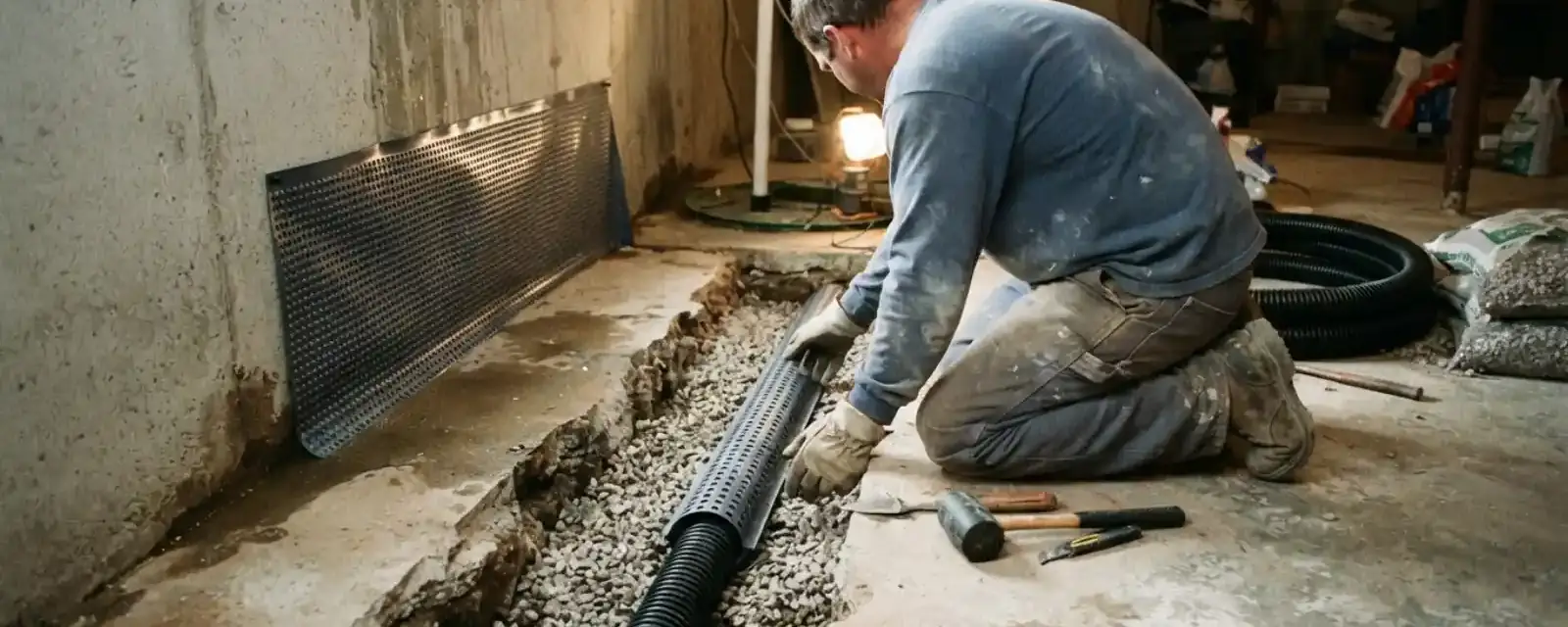
Where basement water comes from
Water gets into a basement in a few ways: through cracks in the wall or floor, at the joint where the floor meets the wall, through a window well, from a sump pit that is overwhelmed or from a sewer backup. Each has a different fix.
That is why a visit starts with questions. When does the water appear, where does it show up and how much? A leak that appears only after heavy rain points to groundwater, while a wet floor drain with a bad smell points to the sewer.
Signs of a basement water problem
Basement water leaves clues. These are the most common ones.
White chalky deposits on walls
Efflorescence, left behind when water moving through concrete evaporates.
Damp spots or stains on the floor
Seepage at the wall-floor joint or through cracks.
Musty smell
Moisture in the air, often with mold behind finishes.
Water at window wells
Clogged drains or a well that fills in heavy rain.
Water at the floor drain
Sewer or sump trouble. Check before treating it as seepage.
Waterproofing options
The least invasive option that solves the cause is usually best. Surface water fixes cost the least and are tried first.
| Method | What it does | Best fit |
|---|---|---|
| Interior drain and sump | A channel along the footing collects seepage and sends it to a sump pit. | Seepage at the wall-floor joint and general dampness. |
| Crack injection | Sealant is injected into a crack. | A single stable crack leaking. |
| Exterior membrane and drain | The wall is excavated and sealed from outside. | Serious wall leakage when exterior access is possible. |
| Grading and gutters | Direct roof and ground water away from the foundation. | Dampness caused by surface water. |
Water in the basement?
Call the 24/7 line. If it is actively flooding, we treat it as an emergency first.
The sump pump is part of the system
An interior drain system carries water to a sump pit, so the pump is critical. A reliable pump, a battery backup and a discharge that sends water outside are part of any plan. Our sump pump page explains the pump side.
Lake County Public Works bars sump and foundation drain water from the sanitary sewer. Any waterproofing plan discharges outdoors, away from the foundation. We make sure the design complies and explain how the water leaves the house.
What waterproofing cannot fix
Waterproofing does not stop a sewer backup, and it does not fix a leaking pipe. If water appears at the floor drain with a sewage smell, the problem is the sewer line. See our sewer line cleaning page.
A pipe leak inside a wall can also look like seepage. Leak detection helps rule out plumbing before waterproofing is considered. If you are unsure which problem you have, we say so and test before recommending work.
What basement waterproofing costs
Waterproofing is priced by the method and the length of wall. We give a clear price before work starts after inspecting the basement and finding the water path.
Insurance rarely pays for waterproofing and often excludes seepage and groundwater. A backup endorsement may cover sudden events. Ask your insurer.
Code and permits note
According to the village, building and plumbing rules both touch this work. Waterproofing sits between plumbing and building work, so permit needs vary by the scope. Call the Village of Vernon Hills building department at 847-367-3700 before work begins, especially if drains or a sump are involved.
The Illinois State Plumbing Code that the village cites applies to the plumbing portions.
Basement waterproofing questions from Vernon Hills homeowners
Yes. Our line is answered 24 hours a day, every day. For active flooding we walk through the quick checks and send a technician. Same-day appointments are offered when available for damp basements.
Groundwater is the usual cause, often when the soil is saturated or gutters discharge near the wall. Surface fixes and a working sump are the first steps.
It removes the moisture source, which is the main cause of mold, but existing mold needs separate cleanup.
No. Lake County Public Works prohibits sump pump and foundation drain connections to the sanitary sewer.
Seepage follows rain and appears at walls and the floor joint. A plumbing leak continues in dry weather. Leak detection can tell them apart.