
When a leak becomes an emergency
A dripping faucet is annoying. A stain spreading across a ceiling, a wet patch on a basement wall or a water meter that keeps spinning with every fixture off is a leak that is still moving. Water finds the easiest path, so the wet spot is often not where the pipe is broken.
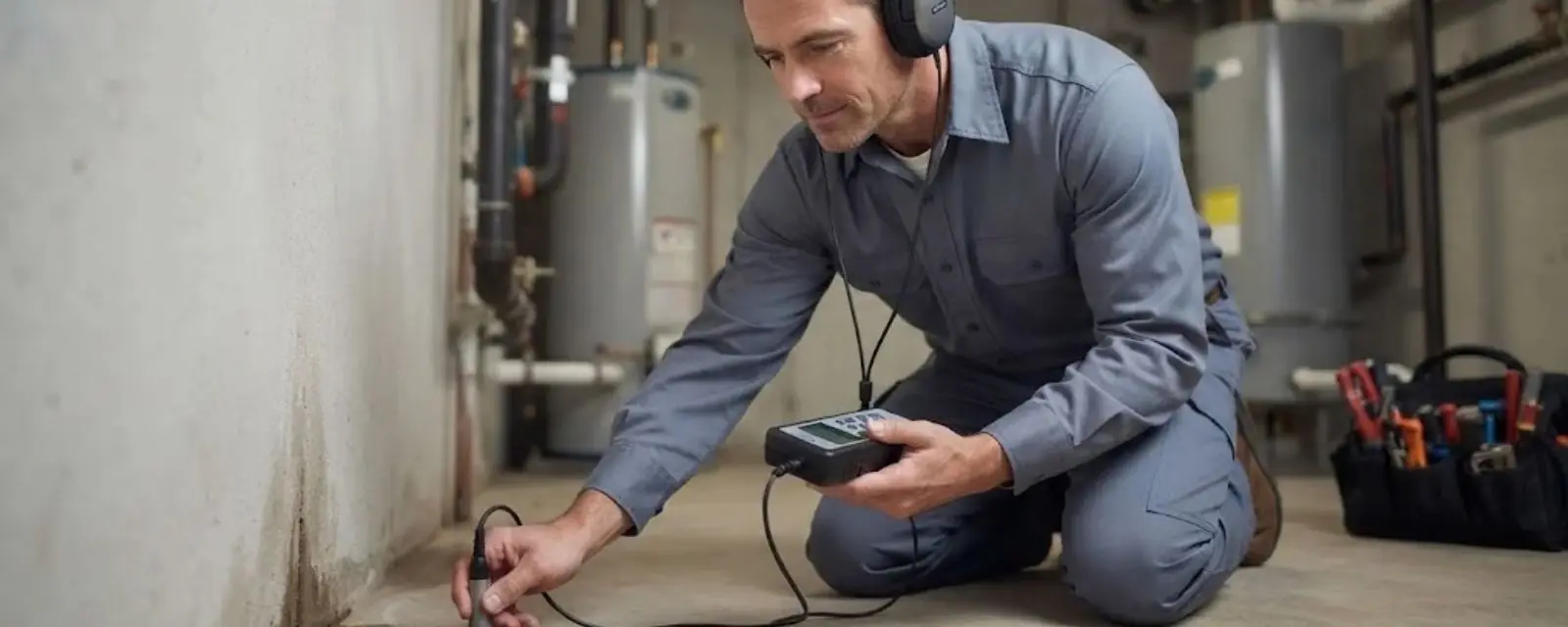
Emergency leak detection in Vernon Hills starts with stopping the water. Then we find the source with listening equipment, pressure tests and thermal imaging instead of opening walls at random. A small hole in a drywall patch costs far less than a gutted room.
What to do while you wait
- Close the main water shutoff, usually near the meter or where the line enters the basement.
- Turn off the breaker for any room with water on the ceiling, light fixtures or outlets near the leak.
- Place a bucket under active drips and lift rugs and boxes off wet floors.
- Take photos and notes of the stains for your insurer before cleanup.
Signs of a hidden leak
Leaks hide for weeks. These are the warnings we most often hear about, in the order homeowners usually notice them.
A water bill that jumped
Usage that rises with no change in your household points to a leak, often a running toilet, a supply line or an underground pipe.
The meter moves with everything off
If the low-flow indicator or dial keeps turning after all fixtures are closed, water is leaving the system somewhere.
Stains, bubbling paint or warped floors
Moisture inside a wall or under a floor shows up as discoloration, soft spots or a musty smell.
The sound of running water
A hiss or trickle in a quiet house when nothing is running suggests a pressurized pipe leak.
Low pressure at one or more fixtures
A broken line steals pressure on its way to the tap.
A warm patch on the floor
Hot water leaks under a slab can warm the floor above them.
A high water bill: check the meter first
You can check for a leak yourself in a few minutes. Turn off every fixture, appliance and ice maker. Look at the meter. If the low-flow indicator is moving or the digits advance, water is flowing somewhere. Wait fifteen minutes and read it again, then close the main valve and see if the movement stops.
If the meter stops when the main is closed, the leak is somewhere inside the building or on the line after the meter. If it keeps moving with the main closed, the problem is on the utility side. Also check toilets with a few drops of dye in the tank, because a silent flapper leak is the most common cause of a high bill.
Water in Vernon Hills comes through the Lake County Public Works system from Lake Michigan, so the billing record is the first evidence. Compare recent bills to the same months last year. A rise without a reason is worth a call.
How we find the leak without tearing things apart
Several methods usually work together. A reading from one tool is confirmed with another before we cut anything.
| Method | What it does | Where we use it |
|---|---|---|
| Pressure test | Isolates a section of pipe and watches for a pressure drop. | Supply lines, slab and buried lines. |
| Acoustic listening | Microphones pick up the sound of water escaping a pressurized pipe. | Walls, floors and buried water lines. |
| Thermal imaging | Shows temperature differences from wet material or hot water leaks. | Ceilings, walls and radiant floors. |
| Moisture meter | Maps how far moisture has spread in drywall, wood and concrete. | Confirming a source and checking the damage. |
| Camera inspection | Looks inside drain and sewer pipes for cracks and joint leaks. | Drain line leaks. See our sewer inspection page. |
Water showing up in the wrong place?
Call the 24/7 line. We will tell you what to shut off and send a technician with detection equipment.
Ceilings, walls and the space under the house
A stain on the ceiling often comes from a bathroom above, a roof leak or a pipe in the wall. We trace it by checking the fixtures above, running them one at a time and using the moisture meter and thermal camera to follow the water backward.
In homes with a crawl space or a basement, we check the exposed pipes, the shutoff valves and the floor joists. Basements are common in this part of Illinois, so a leak often shows as a damp wall, a puddle by a footing or a wet floor drain. That can also be groundwater, which we cover on our basement waterproofing page.
Once found, a repair is usually a small section of pipe or a fitting, and we keep access holes small. Larger repairs, such as a damaged supply run, may lead to a conversation about repiping.
Slab leaks and buried water lines
A slab leak is a leak in a pipe under a concrete floor. It is less common in homes with basements, but it happens in slab-on-grade additions, garages and some townhomes. Signs are a hot spot on a floor, a sound of running water, or a bill increase with no wet spot visible.
Buried water lines between the meter and the house can leak at joints or from age. Signs include a soft, green or wet area of lawn, low pressure and a meter that moves with the main inside the house closed. We locate the leak with acoustic and pressure tests, then discuss spot repair or replacement. Our water line repair page covers the repair side.
Lead service lines are another reason to know what is underground. Lake County Public Works is preparing a lead service line inventory with a final plan due in April 2027, so ask us what your line is made of if we expose it.
Irrigation, yard and pool leaks
Irrigation systems leak underground at valves, heads and glued joints. Signs include a soggy patch, a zone that runs weak or a meter that moves at night. We pressure test each zone and isolate the problem valve or pipe.
Pool and spa plumbing can leak at the pump, filter and return lines. If the water level drops faster than normal evaporation, a bucket test helps tell evaporation from a leak. We can test the lines and help you decide whether the plumbing or the shell is the problem.
What leak detection costs
Detection is usually quoted by the visit and the equipment needed. We give a clear price before work starts, and we tell you what repair may follow so there are no surprises later.
Homeowners insurance often covers sudden water damage and sometimes the cost of finding the source, but often excludes long-term seepage or the pipe itself. Ask your insurer, and keep the detection report and photos.
Code and permits note
According to the permit guide the village publishes, finding a leak is diagnostic work, but fixing one often is not. If the fix means opening walls or replacing supply lines, ask whether your plumber follows the Illinois State Plumbing Code, which the village cites in its permit guide.
Illinois plumbers are licensed through IDPH, which offers a license lookup, so you can check anyone you hire.
Leak detection questions from Vernon Hills homeowners
Yes. Our line is answered 24 hours a day, every day. If water is spreading, we tell you what to shut off, send a technician and start with the fastest way to stop it. Same-day appointments are offered when available for slow leaks.
Compare the bill to the same months last year, then do the meter test: close all fixtures and see whether the meter still moves. Toilets are the most common cause.
Only small ones, and only after the location is confirmed with more than one method. Detection exists to avoid broad demolition.
Sometimes, when the leak caused sudden damage. Policies vary and often exclude long-term seepage or the failed pipe, so ask your insurer before you rely on it.
Often yes, with acoustic equipment, pressure tests and thermal imaging. We give you the location and the options before any floor is opened.