
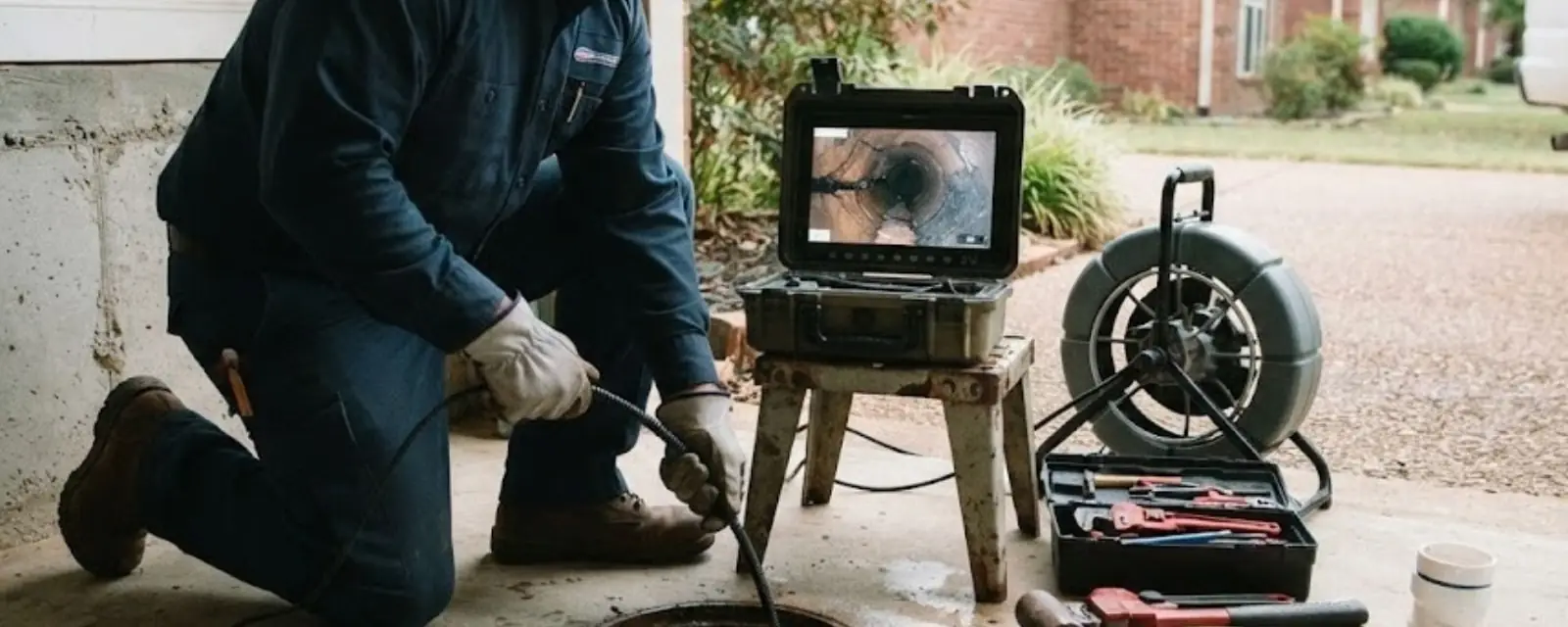
What a sewer camera inspection shows
A waterproof camera on a flexible cable travels through the drain, sending live video to a monitor and recording it for you. It shows roots, cracks, offset joints, scale, low spots that hold water and debris. It also shows pipe material and whether the line is continuous all the way to the connection.
A built-in transmitter lets the technician locate the camera head from above ground. That means we can tell you the depth and mark the spot, so any repair starts in the right place instead of with exploratory digging.
When a camera inspection makes sense
Cameras are diagnostic tools, so they pay off most when something is unclear.
A clog keeps returning
If the line clogs again after cleaning, the camera shows whether roots, scale, a belly or a break is the cause.
A cable gets stuck
A cable that stops at the same distance hints at an obstruction, and the camera identifies it.
Buying an older home
A pre-purchase inspection shows hidden problems before closing, and the recording gives you negotiating information.
Before landscaping or remodeling
Know where the line runs and what shape it is in before trees, patios or an addition go in.
After a repair or cleaning
A follow-up run confirms the work and documents the result.
A sewer smell with no obvious cause
Cracks and open joints leak sewer gas, and the camera can find them.
How the inspection works
Find the access
We use a cleanout when there is one. If not, we remove a toilet or use a roof vent and tell you ahead of time.
Run the camera
The camera goes through the line from the house toward the connection, with live video and recording.
Locate the problems
The transmitter lets us mark depth and position for every issue we find.
Review with you
We go over the footage and written notes and explain what needs action and what can wait.
Want to see inside your line?
Call and describe the symptoms. We will schedule an inspection or treat it as an emergency if sewage is backing up.
Pre-purchase inspections in Vernon Hills
Homes in the Vernon Hills area range from houses in the village's earlier subdivisions to the newer retail and residential development near Mellody Farm. A camera run is useful in any of them, because the pipe condition is not visible during a showing. The recording and the notes belong to you and can be shared with a seller or an inspector.
If the camera finds a problem, our sewer line repair page explains the options and what each costs to think through. If the camera finds a clog or buildup, our sewer line cleaning page describes the cleaning that follows. We never assume you want repairs. You see the footage and decide.
What we do and do not diagnose
A camera is a powerful tool, but it has limits. It cannot see through a full pipe, so a line that is blocked has to be cleared before the camera can pass. It does not measure soil movement, and it cannot tell you whether the public main is in good shape beyond the cleanout.
If the camera shows the public main is the problem, we give you the recording and the location so you can raise it with Lake County Public Works, which lists a public works phone at 847-377-7500. For heavy buildup that stops the camera, we recommend hydro jetting before a second run.
What a camera inspection costs
A camera inspection is usually quoted separately from cleaning or repair, so you pay for the information and decide what to do with it. We give a clear price before work starts and tell you what is included, such as the recording and locating.
Insurance rarely covers an inspection by itself. Some policies reimburse it when it shows a covered loss, so keep the report.
Code and permits note
According to the village permit guide, sewer repair needs a permit. A camera inspection by itself is not a repair, so it does not. If it finds a defect, the village permit guide describes the permit and inspection that sewer repair requires.
Keep the written findings. They help when you talk to the village or an insurer.
Sewer camera inspection questions from Vernon Hills homeowners
Most inspections of a typical residential line take well under two hours, including locating. Longer lines or heavy buildup take more time.
Yes. You receive the recording and our notes on what we found, and you can share them with a seller, an inspector or an insurer.
It can show cracks, open joints and root intrusion, which are common leak points, but it does not measure flow. A technician interprets the footage.
Yes. A pre-purchase inspection shows pipe material and condition before you close. Tell us your timeline and we will schedule around it.
Call the 24/7 line and tell us. We treat active backups as emergencies, clear the line first and camera it afterward.