
Installation versus replacement: which page applies
A like-for-like swap of a failed tank is replacement, and our water heater replacement page handles that urgent case. Installation is the planned version. You are moving the heater, changing fuel, adding a second unit, going tankless or choosing a heat pump model, or finishing a basement or addition.
The difference matters because planned work lets you make better choices. You can compare units, check the gas line or electrical capacity ahead of time, and schedule the permit inspection without a cold house deadline.
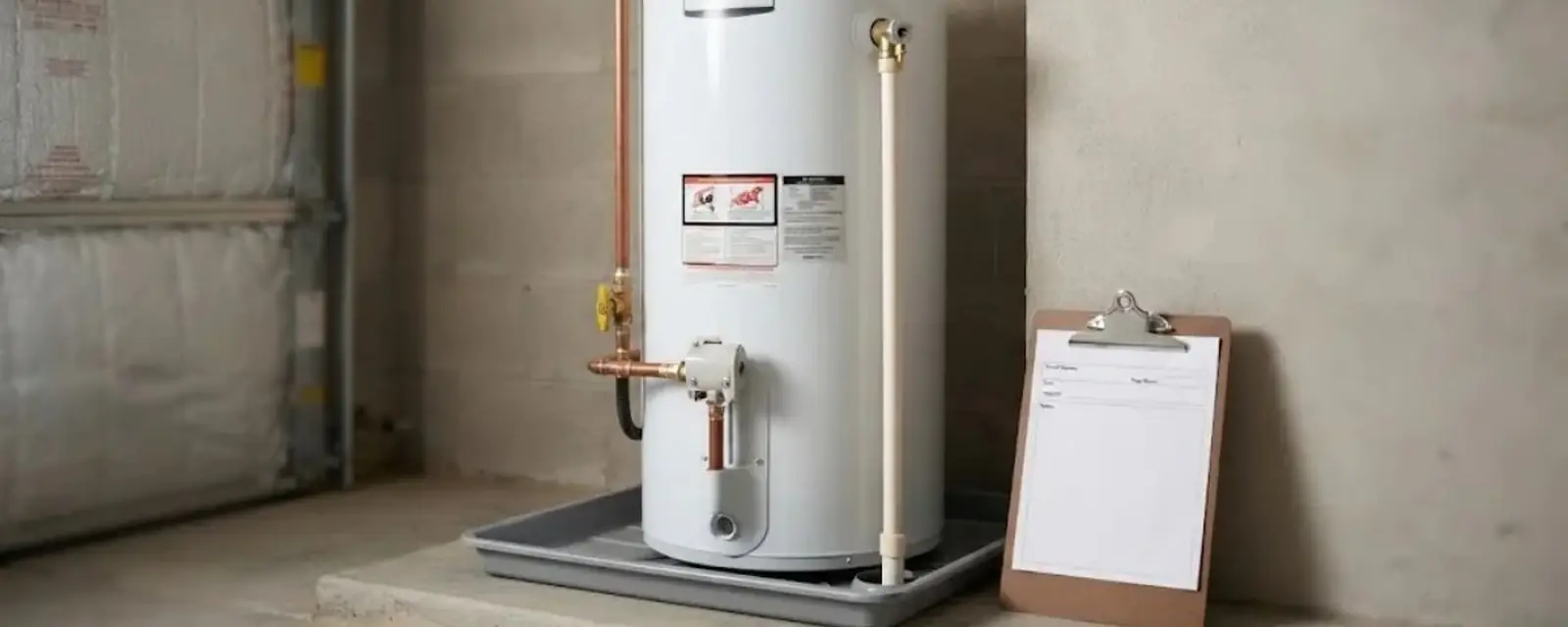
What goes into a proper installation
Most callbacks on water heater work trace back to the parts around the heater rather than the heater itself. These are the items we verify on every install.
Location and clearances
Combustion air, access for service, floor drain or drain pan, and distance from combustibles.
Venting
Atmospheric flue, power vent or direct vent, with the right pipe, slope, termination and support.
Gas or electrical supply
Gas pipe sized for the burner, or a circuit sized for the elements or compressor, with a disconnect.
Relief and discharge
A new relief valve piped to a safe termination in metal, so a discharge cannot scald anyone or flood the floor.
Expansion control
An expansion tank where the plumbing is a closed system, so pressure does not climb every time the heater runs.
Shutoffs and unions
A cold-line shutoff and unions so the heater can be serviced or swapped later.
Choosing a heater type for your project
| Type | Fits best when | Plan for |
|---|---|---|
| Standard gas tank | You have an existing gas line and a working flue. | Combustion air, a clear flue path and a gas shutoff. |
| Standard electric tank | You have no gas or want the simplest install. | A dedicated circuit and an electric disconnect. |
| Power vent or direct vent gas | No chimney is available or the old flue is not usable. | Vent pipe routing and an electrical outlet nearby. |
| Tankless gas | You want continuous hot water and have space on a wall. | Gas line capacity, venting and annual flushing. See our tankless water heater page. |
| Heat pump (hybrid) | You want lower electricity use and have open air space. | Condensate drain, clearance, and a circuit at the right amperage. |
If your old unit is leaking and you are choosing its replacement at the same time, call and we will treat it as an emergency rather than a project.
Permits and Illinois licensing
In Illinois, plumbers are licensed through the Illinois Department of Public Health, and the Village of Vernon Hills asks plumbers to furnish a copy of their state license and contractor registration with a water heater permit. The village's permit guide describes an over-the-counter permit with a final inspection for replacement, and lists the new relief valve, metallic discharge piping, shutoff and disconnect requirements.
Because the guide dates from a few years ago, we check current requirements with the building department at 847-367-3700 for new locations and fuel changes. You can also check any plumber's Illinois license yourself using the Illinois Department of Public Health's plumbing license verification lookup, and we encourage you to.
Planning an upgrade?
Call and describe the project. We will tell you what the heater, the venting and the permit will involve before you decide.
Gas line, venting and electrical: the hidden costs
The cost of a water heater project often hides in the parts you cannot see in the product listing. A tankless unit may need a larger gas pipe than the old tank because it burns fuel faster. A heat pump unit may need a new circuit and a condensate line to a drain. An old chimney may be oversized or damaged for a modern, more efficient appliance.
We look at each of these before quoting. If the project grows beyond a water heater, for example a rework of supply piping, the plumbing installation page describes how we handle larger scopes.
What installation costs
Installation prices vary more than replacement prices because the scope varies. We give a clear price before work starts and a written list of what is included, so you can compare it with any other quote.
Insurance typically does not cover planned upgrades. If you are replacing a unit that failed from a sudden leak, damage to nearby property may be covered, so keep your records.
Code and permits note
The village permit guide describes what a new water heater must include, such as a new relief valve with a metal discharge pipe and a gas shutoff or electric disconnect. Those items follow the Illinois State Plumbing Code that the guide cites.
Ask your plumber which of them apply to your unit, and confirm the current rules with the Village of Vernon Hills building department at 847-367-3700.
Water heater installation questions from Vernon Hills homeowners
Yes, if the space meets clearance, venting and drain requirements. We check combustion air, a flue path or vent route, access for service and a safe discharge point first.
The village's published permit guide says tankless units do not need a permit, but the guide is a few years old, so confirm with the building department at 847-367-3700.
It can be, if you have open air space, a nearby drain and the right circuit. The unit cools and dehumidifies the room it sits in, which some basement owners like and some do not.
We coordinate the permit and inspection with the village for permitted work and explain which documents we need.
Same-day appointments are offered when available. Planned upgrades are often scheduled for the next convenient day so that parts and permits line up.