
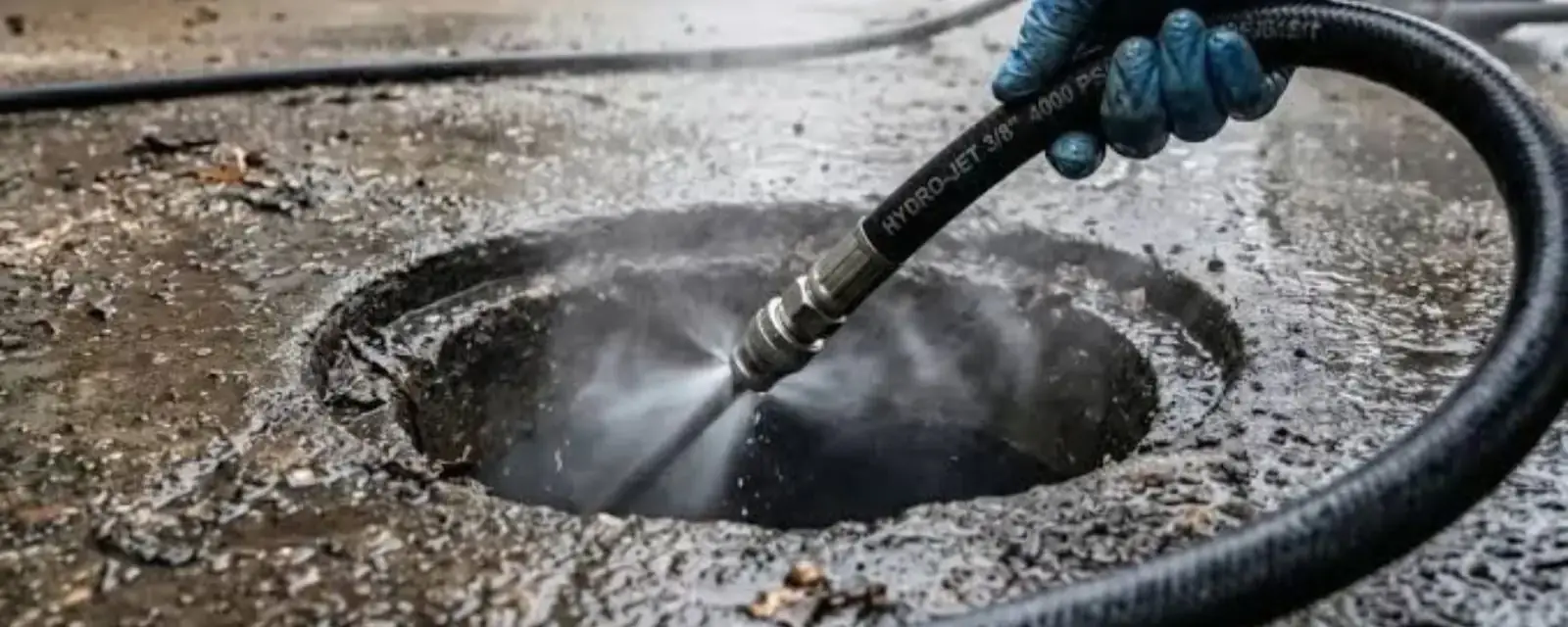
When a repeat clog becomes a hydro jetting emergency
A single clog is a nuisance. A line that clogs again within weeks, or a main that backs up into a basement floor drain after a cable has been through it, is a pipe with something coating its walls. Hydro jetting is the tool built for that problem, and when sewage is reaching your floor it is also the fastest way to restore flow.
Callers often tell us the last plumber snaked the line and it stopped working again, or the cable got stuck partway. That pattern points to grease, scale or roots that a cable only punches through. Emergency hydro jetting in Vernon Hills starts with a call, a few questions about the pipe, and a plan for how to reach it.
While you wait
- Stop using the washer, dishwasher and showers if the main line is backing up.
- Keep people and pets out of any sewage water and open a window if the smell is strong.
- Do not use chemical drain cleaners, because they do not reach the problem and make the line unsafe to open.
- Locate your cleanout, usually a capped pipe near the foundation wall or in the basement floor, so the technician can reach it fast.
How hydro jetting works
A hydro jetter feeds a hose with a specially shaped nozzle through a cleanout into the pipe. The nozzle shoots high-pressure water jets in several directions. Rear-facing jets pull the hose forward, and the water scours the pipe wall, flushes debris downstream and cuts through grease and scale.
Residential machines commonly run at several thousand psi, with flow rates measured in gallons per minute. The pressure is adjusted to the pipe and the blockage. Technicians use different nozzles for grease and scale, for roots, and for a gentle rinse once the line is open. Our drain cleaning page covers cable and auger work for ordinary clogs.
Jetting or snaking: how we decide
Hydro jetting is not the answer to every clog. We recommend the lightest tool that will work, and we use a camera when we are not sure about the pipe's condition.
| Situation | Cable or snake | Hydro jetting |
|---|---|---|
| Single soft clog in a branch drain | Usually enough. | More than the job needs. |
| Grease coating a kitchen or restaurant line | Pokes a hole through the grease and leaves the walls coated. | Strips the walls and carries the grease away. |
| Roots in a main line | Cutters open the line but leave root hairs. | Cleans the pipe after cutting so regrowth slows. |
| Scale or sludge in older cast iron | Does not remove it and can break loose scale. | Removes scale when the pipe is sound, camera-checked first. |
| Pipe is cracked, collapsed or offset | May stall or hang up. | Not appropriate. Repair first. |
When we camera-check before jetting
High-pressure water is the wrong tool for a pipe that is cracked, collapsed or held together by habit. Orangeburg fiber pipe, badly deteriorated clay and cast iron with flaking scale can all be damaged or can release debris downstream. A short camera run shows what we are dealing with before pressure goes in.
If the footage shows a problem, we explain the options and the next step with you. That might be a spot fix on our sewer line repair page, or a full look using a sewer camera inspection before anything else is decided. We do not jet a pipe we think will fail.
Line clogging again?
Call the 24/7 line. We will ask about the pipe, the symptoms and how often it has backed up, then plan the right equipment.
Restaurants, shops and multi-unit buildings
Kitchen lines are the classic jetting job. A restaurant drain carries hot grease that cools and sticks, and a trap or interceptor that is overdue for pumping can push grease further down the line. Jetting between pumping dates keeps the building drain open.
Lake County Public Works, which serves the Vernon Hills area, has a sewer use ordinance that requires food service businesses to have a grease removal system. Owners must maintain it, which includes removing floating material at least every 90 days and pumping the unit fully on a set schedule. Jetting does not replace pumping, but it helps keep the line past the interceptor clear. See our commercial plumbing page for the after-hours service we offer businesses.
Roots, scale and what your pipe may be made of
Tree roots enter sewer lines at joints and small cracks, and they grow into dense mats that catch everything that passes. Mature trees and shrubs near a lateral are a common cause of repeat backups. Cutting the roots and then jetting is the standard sequence, and a camera afterwards shows what remains.
Scale builds in older iron and clay pipe from minerals and waste. The age and material of your pipe decide how aggressive we can be, and homes in Vernon Hills range from houses near the village's older core to newer subdivisions, so we confirm what is underground instead of assuming. If roots keep returning, a liner or a repair may be a better long-term answer than yearly jetting.
What hydro jetting costs
Pricing depends on the line, the access point and the severity of what is inside it. We give a clear price before work starts and tell you if a camera pass or a different tool would be a better first step.
Insurance usually does not pay to clean a clogged line. A sewer or water backup endorsement may pay for damage that follows a backup, so ask your insurer before the next storm.
Code and permits note
Jetting clears a line and usually needs no permit. If a camera shows damage, the village permit guide describes permit and inspection rules for sewer repair, and it cites the Illinois State Plumbing Code.
Lake County Public Works maintains the public sewer, so call them if you suspect the main.
Hydro jetting questions from Vernon Hills homeowners
Yes. Our line is answered 24 hours a day, every day. If sewage is backing up or a main line is blocked, we prioritize the call, tell you what to shut off and dispatch equipment. Same-day appointments are offered when available for less urgent jobs.
It can, if the pipe is cracked, collapsed or severely deteriorated. That is why we check unknown or older lines with a camera first and decline to jet a pipe we think will fail.
Homes with one-time clogs may never need it. Restaurants and lines with grease or scale often benefit from jetting on a schedule, such as once or twice a year.
It is better for grease, scale and root hairs, because it cleans the pipe wall. For a simple soft clog, a snake is faster and costs less.
No. It clears roots and slows regrowth, but roots return while the entry point exists. A liner or a repair addresses the crack that lets them in.