
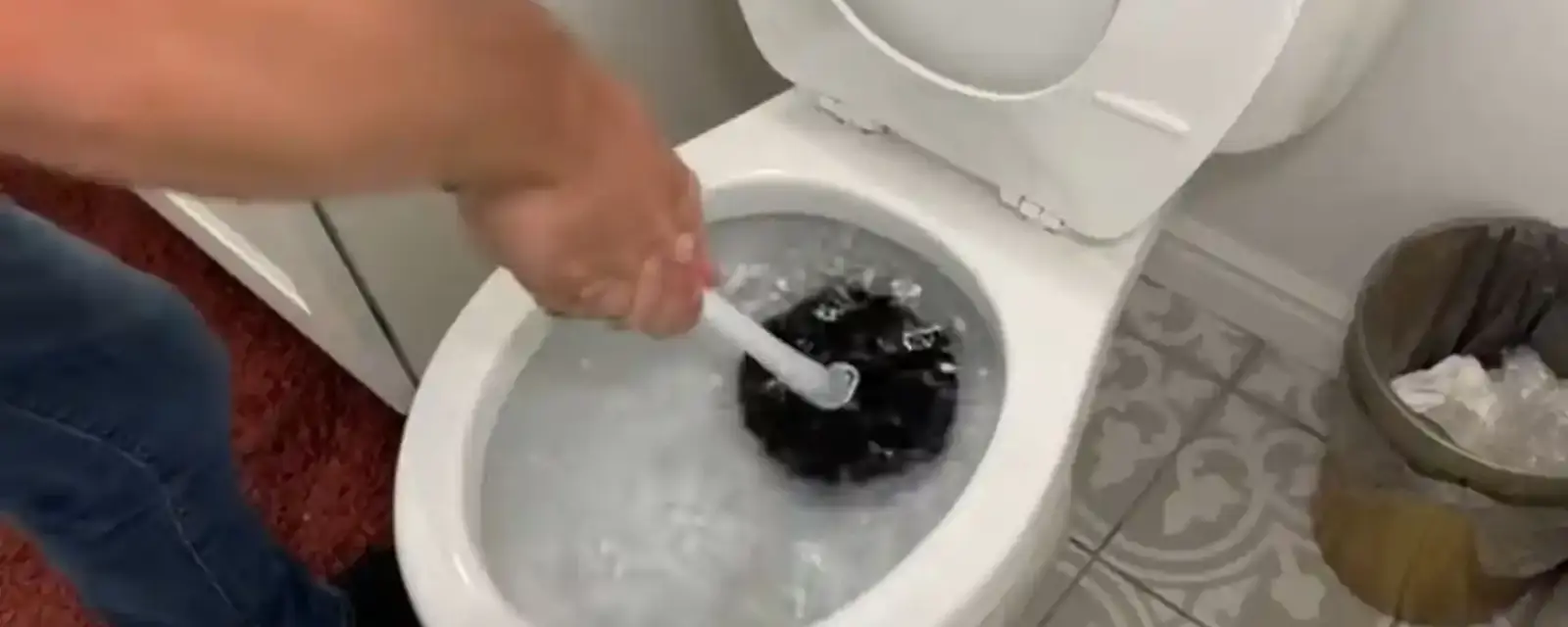
What hot water can do
Warm water can soften a clog made of paper, soap or organic waste. A little dish soap lets the water slip past the blockage. If the clog is soft and sits in the trap, this can free it without a plunger.
It does not work on solid objects, a toy or a wad of wipes. It also does not help if the clog is deep in the line. In those cases, you need a plunger, an auger or a plumber.
A safe way to try hot water
The key word is warm, not boiling. Safe and slow works better than hot and fast.
Stop flushing
Do not flush again if the bowl is full. Turn off the supply valve behind the toilet.
Use hot tap water
Heat water from the tap, not boiling water. Hot tap water or water heated on the stove to a hot-bath level is enough.
Add dish soap
Squirt a good amount of dish soap into the bowl to lubricate the clog.
Pour from waist height
Pour slowly from about waist height so the water has force without splashing.
Wait twenty minutes
Let the soap and water work, then see if the level drops.
Flush once to test
If the level drops, flush once. If it rises, stop and use a plunger.
Why boiling water is a bad idea
Porcelain can crack when heated fast, especially if the bowl is cold. A cracked bowl means a replacement. Boiling water can also soften the wax ring or the plastic parts under a toilet and damage some pipes.
If you have PVC drains, very hot water can soften joints. Stick to hot tap water. If that does not work, a plunger is the next tool. Our toilet repair page explains what we do when the toilet needs a plumber.
Why some clogs resist hot water
Hot water softens organic material, but it does nothing to a hard object like a toy, a comb or a bar of soap that has lodged in the curve of the trap. Wipes and paper towels do not dissolve, and water just flows around them.
If you know something solid went down, skip the hot water and go to an auger or call a plumber. Repeated flushing pushes the object deeper and makes it harder to remove, and it can turn a simple retrieval into a pull of the toilet from the floor.
A plumber can pull the toilet, retrieve the object and reset it with a new seal. That is a routine job, and it protects the drain line behind it.
Toilet still full?
Call the 24/7 line. We will tell you what to try and send a technician if it is not clearing.
Know where the clog may be
In Vernon Hills, the building sewer is the owner's to keep clear under the Lake County Public Works sewer use ordinance. If hot water, a plunger and an auger do nothing and other drains are slow, the blockage may be in that pipe.
If neighbors have the same problem, the public main may be involved. Public Works lists an emergency line at 847-377-7188. Otherwise, call a plumber to check your own line.
Source type: Lake County Public Works sewer use ordinance and published contactsWhat to try after hot water
A flange plunger is the next step. Seal the drain and use steady strokes. If that fails, a closet auger reaches the trap and often brings the clog out. Do not use chemical cleaners.
If the toilet clogs again, or if the bowl drains slowly after every flush, the problem may be deeper. Our drain cleaning page explains how we clear the branch line, and our sewer line cleaning page covers the main.
When the clog is not in the toilet
If the toilet clears but the tub gurgles, or a floor drain bubbles after a flush, the blockage is further down the line. Stop using water and call a plumber. More flushing will not fix a clogged branch or main.
A plumber can run a cable from a cleanout and, if the line keeps clogging, a camera to see why. Recurring clogs often come from roots, grease or a pipe that has settled. Fixing the cause costs less than repeated emergency calls.
Prevent the next clog
Use a modest amount of toilet paper and avoid flushing wipes, paper towels, hygiene products and anything else not meant for the toilet. Teach children to keep toys away from the bowl.
An older toilet that clogs often may be worth replacing. Newer models have better flush designs. For a home in Mundelein or nearby towns, the same advice applies.
Rules and guidance note
According to common plumbing guidance, never pour boiling water into a toilet, because it can crack the porcelain. Hot tap water is the safer choice.
If the clog keeps returning, the problem may be in the line. Illinois plumbers are licensed through IDPH, which offers a license lookup, so you can check anyone you hire.
Hot water and toilet clog questions
No. It can crack the porcelain and damage seals. Use hot tap water.
Yes. It lubricates the clog so water can slip past.
About twenty minutes. If nothing changes, use a plunger.
Try a flange plunger and then a closet auger. If other drains are slow, call a plumber.
Lake County Public Works maintains it. Its emergency line is 847-377-7188.