
Start with the decision: repair or replace
Before you shop, confirm the heater is really finished. A pilot that will not stay lit, a tripped breaker or a worn thermostat can look like a dead tank and cost far less to fix than to replace. Our water heater repair page lists the common faults.
Replacement is usually the better choice when the tank leaks from the shell, when the unit is well past a decade old, or when repairs have started to stack up. A leak from the tank body cannot be patched. It means the steel has rusted through, and the next step is a new heater.
Pick the heater type before you pull the old one
The new unit has to match the fuel, the venting and the space. A gas tank needs a flue and a gas line. An electric tank needs a dedicated circuit of the right size. A tankless unit needs more gas or electric capacity than most tanks, and a heat pump unit needs room and airflow.
Size matters as much as type. A household with several bathrooms and a big family needs a tank that recovers quickly, or a tankless unit with enough output. Our tankless water heater page explains when that route makes sense.
The replacement steps, in order
These steps look simple on paper. The risk sits in the details of gas, venting and the relief valve, which is why most Vernon Hills homeowners hire a plumber.
Shut off fuel and water
The gas valve or electric breaker goes off first, then the cold water supply. This protects you and the new heater.
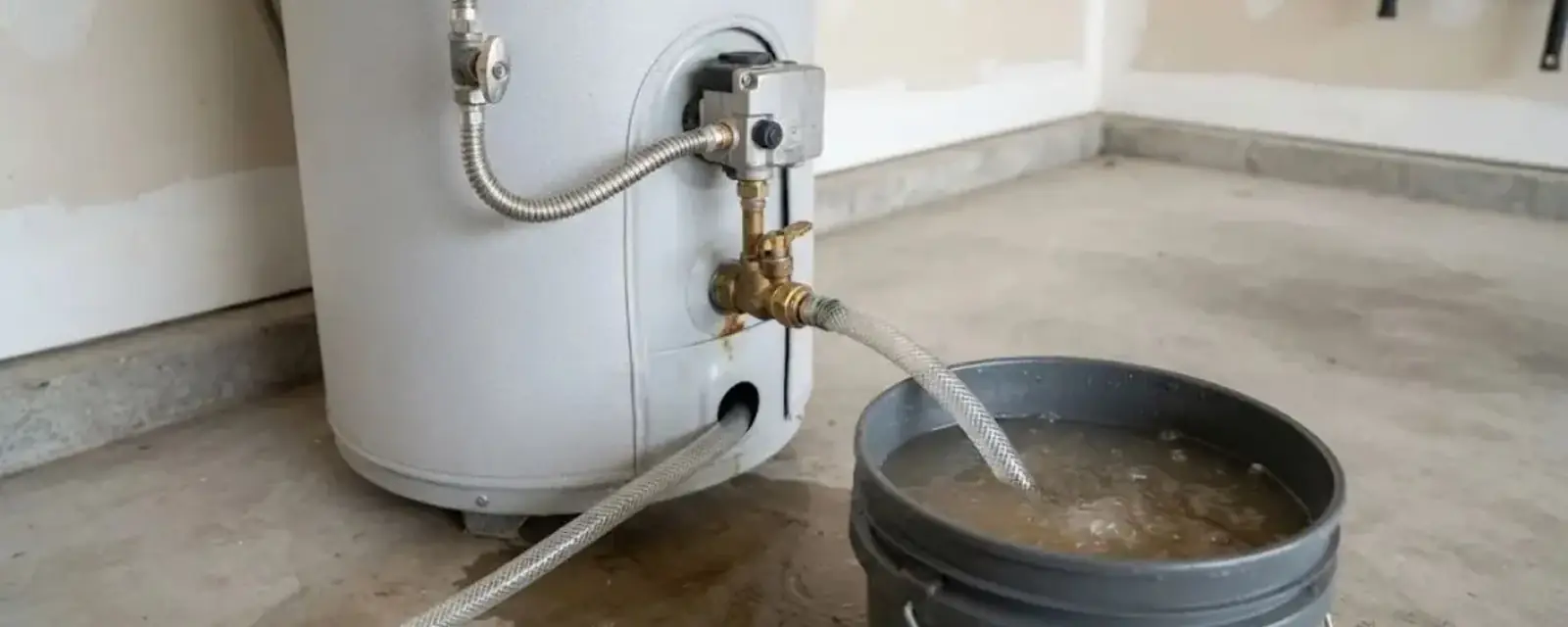
Drain the old tank
A hose runs from the drain valve to a floor drain or outside. Open a hot tap upstairs so the tank empties.
Disconnect and remove
Water lines, gas line, flue and discharge pipe come off. The old tank is heavy and full of sediment, so it usually takes two people.
Set and connect the new unit
The new heater goes on a level base or drain pan. New flexible connectors, a shutoff valve and a new relief valve discharge pipe go in.
Fill, purge and test
Fill the tank with a hot tap open, check every joint for leaks, then restore gas or power and light or start the unit.
Check venting and combustion
On a gas unit, the flue must draw correctly and carbon monoxide levels should be checked before you leave the area.
What the village expects to see
The Village of Vernon Hills publishes a permit guide for water heater replacement, and the items below come from it. Check with the building department for the current version.
| Requirement | Why it matters | Who handles it |
|---|---|---|
| Permit | The village issues water heater permits over the counter and expects a final inspection. | The plumber, or an owner-occupant of a single-family home. |
| New temperature and pressure relief valve | Prevents a tank from building dangerous pressure. | Installed with the heater. |
| Metallic discharge pipe | Carries relief valve discharge to a safe location. | Installed to code, not left loose. |
| Shutoff on the cold line | Lets you isolate the heater without closing the main. | Plumber. |
| Gas shutoff or electric disconnect | A way to stop fuel or power at the unit. | Plumber or electrician. |
No hot water right now?
Call the 24/7 line. We will ask about the tank and tell you whether it is a repair or a replacement.
What the Vernon Hills permit guide says
The Village of Vernon Hills building department, at 290 Evergreen, publishes a water heater permit guide. It says a replacement permit is issued over the counter, needs a final inspection and calls for a completion bond. It also says the work should be done by a licensed plumber, with an exception for an owner who lives in the single-family home.
The guide is a few years old, so call the building department at 847-367-3700 to confirm today's rules. Tankless units are described separately in the guide as not needing a permit. Plumbers are licensed through IDPH, which offers a plumbing license verification lookup, so you can check anyone you hire.
Source type: Village of Vernon Hills building department permit guideCan you do it yourself?
In some cases the village allows the owner of a single-family home to do the work. That does not make it easy. A gas leak, a bad flue or a missing relief valve can turn a replacement into a fire or carbon monoxide risk. A tank is also heavy, and a full one is hazardous to move.
If you are comfortable with plumbing and the heater is electric, the project is more realistic. For gas heaters, we recommend a licensed plumber. Our water heater installation page explains what a full install includes, and our water heater replacement page covers emergency swaps.
After the new heater is in
Set the thermostat at a safe temperature, label the shutoffs and write down the install date. Flush the tank once a year to reduce sediment, and ask the plumber about an anode rod and an expansion tank if your system needs them.
Water in Vernon Hills comes from Lake Michigan through the Lake County Public Works system. The utility reports its results each year, but it does not give a hardness figure we would rely on. A simple test at your tap tells you whether scale will shorten the life of the new heater. Homes in Mundelein and nearby towns can use the same approach.
Rules and guidance note
According to the village permit guide, replacing a tank water heater uses an over-the-counter permit, and the guide says the work must be done by a licensed plumber, with an exception for a single-family owner-occupant.
The guide cites the Illinois State Plumbing Code. Confirm current rules with the Village of Vernon Hills building department at 847-367-3700.
Water heater replacement questions
A straightforward tank swap often takes a few hours. Changing fuel type, moving the unit or fixing venting adds time.
The village's published permit guide describes an over-the-counter permit with a final inspection for water heater replacement. Confirm the current rule with the building department at 847-367-3700.
The village guide allows an owner of a single-family home to do the work, but gas and venting add risk. We recommend a licensed plumber for gas units.
The plumber normally hauls it away. Ask before the job starts so it is included.
Sudden tank failure that floods a basement may be covered for the damage. The heater itself usually is not. Check your policy.