
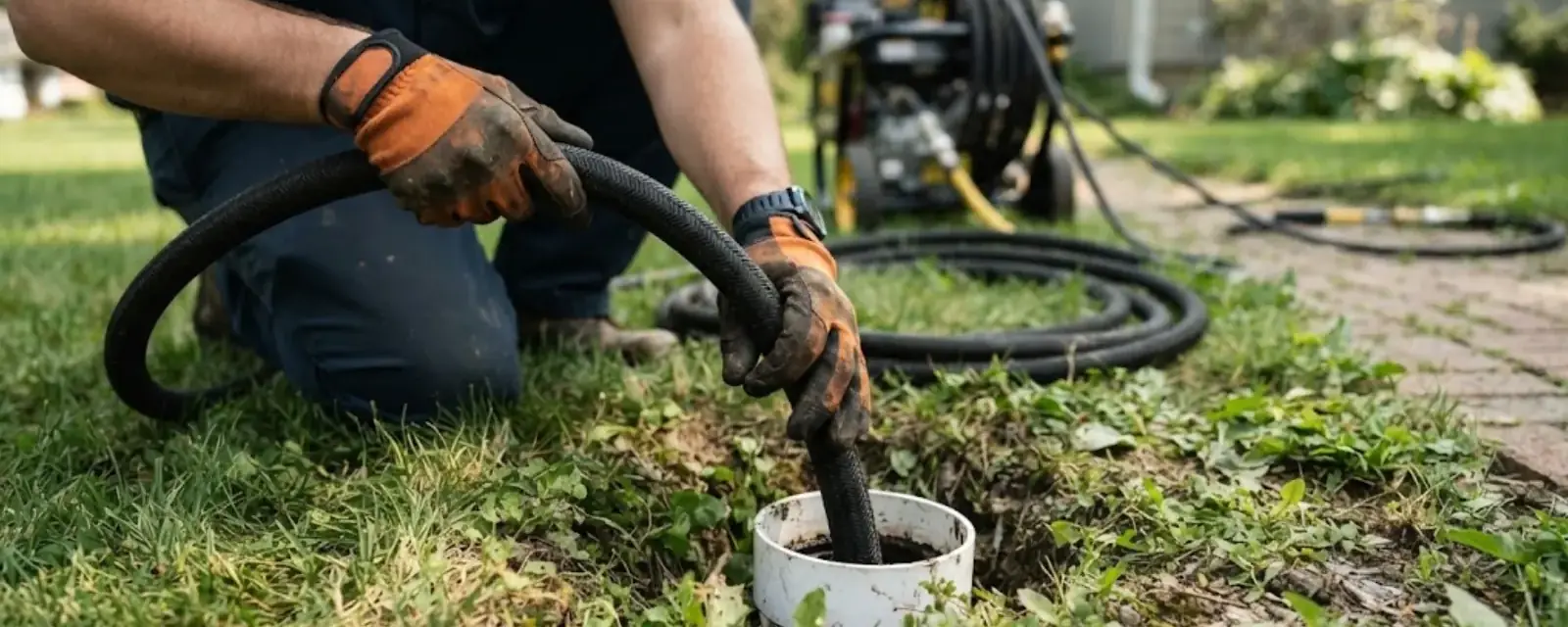
How hydro jetting works
A hose with a special nozzle goes into the main line through a cleanout. Water shoots out through small jets at high pressure. Rear-facing jets pull the hose forward and forward jets break up the clog. The water scrubs the pipe wall and flushes debris to the main.
A cable cuts a hole through a blockage. Jetting cleans the whole pipe. That difference matters when grease, scale or root hairs keep bringing the problem back. Our hydro jetting page describes the service.
Cable or jet
Pick the lighter tool when it works. Jetting is for lines that need a real cleaning.
| Situation | Cable | Hydro jet |
|---|---|---|
| Soft clog or wipes | Usually enough. | Not needed. |
| Grease buildup | Leaves walls coated. | Cleans the wall. |
| Root intrusion | Cuts roots. | Cleans after cutting. |
| Scale in old iron | Poor. | Removes scale if the pipe is sound. |
| Cracked or collapsed pipe | May hang up. | Do not use. Repair first. |
When jetting is risky
High pressure can damage pipe that is already failing. Orangeburg, badly deteriorated clay and brittle cast iron can crack or collapse under a jet. That is why a camera look comes first for older or unknown lines.
If the camera shows a problem, we recommend repair before jetting. See our sewer camera inspection page for what the camera shows. A pipe in good shape benefits from jetting, and a pipe in bad shape needs a different plan.
Signs your main line may need cleaning
Slow drains in several fixtures, gurgling toilets, sewage smell near the cleanout and water backing into a basement floor drain are all signs of a main line problem. A line that has been cabled repeatedly and still clogs is a candidate for a camera and a jet.
Seasonal patterns matter. Backups in spring and summer often point to roots, because growth speeds up in warm months. Backups after heavy rain can point to clear water entering the system, which jetting does not fix.
Ask the plumber to show you what they find. A good technician explains what is in the pipe and what the options are before any decision.
Main line backing up?
Call the 24/7 line. We will plan the right equipment and check the pipe first.
Lake County rules for homes and kitchens
Lake County Public Works maintains the sanitary sewer in Vernon Hills, and its sewer use ordinance makes the owner responsible for the private building sewer. The ordinance also requires food service businesses to have grease removal systems, with a minimum size of 500 gallons, floating material removed at least every 90 days and full pumping on a set schedule.
Jetting helps keep a line open, but it does not replace pumping. Public Works lists 847-377-7500 for questions about the ordinance and 847-377-7188 for emergencies.
Source type: Lake County Public Works sewer use ordinanceWhat to expect during a jetting visit
The technician finds the cleanout, runs a camera if needed and then jets in passes. Water and debris move downstream, so we make sure the downstream line is clear. A final camera run confirms the result.
Jetting uses a lot of water and needs a safe spot for any spray. Tell us if the cleanout is in a finished space. Our sewer line cleaning page explains the full process.
Aftercare once the line is clear
After jetting, avoid putting grease down the drain and keep wipes and paper towels out of the toilets. Mark your cleanout so you can find it fast, and keep the area clear.
If the camera showed a belly, a crack or roots, plan the next step soon. A line that has been cleaned and left damaged may clog again. We give you the footage and a plain explanation, so you can decide without pressure.
Residential and commercial lines compared
A house line is usually 4 inches and carries household waste. A commercial line may be larger and carries grease, solids and heavy use. Jetting a commercial line can take more passes, and it is often scheduled outside business hours.
Our commercial plumbing page explains how we plan that work around a business.
How often should a line be jetted?
A house with a healthy line may never need jetting. A restaurant, or a house with roots or scale, may need it every year or two. The schedule depends on what the camera shows.
If roots keep returning, a liner or a spot repair may be a better long-term answer than regular jetting. See our sewer line repair page. Homes in Mundelein and nearby towns follow the same logic, though public sewer arrangements differ.
Rules and guidance note
According to Lake County Public Works, it runs the sanitary sewer main in this area, and your service line to the main is yours to keep clear. If jetting finds a broken pipe, the village permit guide describes the repair permit and inspection.
The guide cites the Illinois State Plumbing Code.
Hydro jetting questions
Not always. We camera-check older lines first and avoid jetting pipe that may fail.
For grease, scale and root hairs, yes. For a soft clog, a cable is enough.
Often an hour or two for a typical home line, longer for long runs or heavy buildup.
Often, to keep grease lines clear between pumping dates. Local rules also require grease removal systems.
Lake County Public Works maintains the public main. The owner maintains the private building sewer.